February 2026 | Reading Time: 7 minutes
Everyone’s got that one album or artist, right? The one that completely rewired your brain and made you realize music could be more than just background noise.
For me, that album was Muse’s Black Holes and Revelations (2006). It showed me music could be theatrical, cinematic, and completely unashamed of its own excess. That discovery led me down a path from streaming playlists to building a physical vinyl collection—and it changed how I experience music forever.
The Moment It Clicked
Before that, I was pretty much a radio head (no pun intended), (okay, a little pun intended), just enjoying whatever played in my dad’s car during our drives. I wasn’t actively seeking out music; it was just… there. But then I got my hands on that Muse CD, and everything changed.
I still remember the first time Map of the Problematique hit. That synth intro building into those massive guitars, Matt Bellamy’s vocals soaring over this apocalyptic soundscape—it was bombastic, it was dramatic, it was absolutely ridiculous. And it was perfect.
“Muse gets memed for being over-the-top, and yeah, they absolutely are. But when it works? Man, it just works.”
Muse gets memed for being over-the-top, and yeah, they absolutely are. But when it works? Man, it just works. That album showed me music could be theatrical, cinematic, and completely unashamed of its own excess. I was hooked.
From CDs to Vinyl: Making Music Physical
Once I fell down that rabbit hole, I needed more. More albums, more artists, more of that feeling. But streaming felt… temporary? Intangible? I wanted something I could hold, something I could display, something that screamed “this is MY space and these are the things that matter to me.”
So I turned to vinyl.
“Covering your walls and shelves with albums isn’t just decoration. It’s a statement. It’s building a physical archive of the sounds that shaped you.”
Because here’s the thing: covering your walls and shelves with albums isn’t just decoration. It’s a statement. It’s building a physical archive of the sounds that shaped you. Every record you pull off the shelf has a story—where you bought it, what you were going through when you first heard it, why it mattered.
The Albums That Built My Collection
Queens of the Stone Age – Songs for the Deaf (2002)
Dave Grohl behind the kit, pounding out these desert rock anthems with No One Knows cutting through with those screeching harmonics that sound absolutely massive on vinyl. The whole album plays like a radio station road trip, and the vinyl pressing preserves every gritty detail.
Why it matters on vinyl: The space between Josh Homme’s guitar notes, the way feedback decays naturally instead of being digitally cut off.
The Strokes – Is This Is (2001)
Songs like Someday and Last Nite might sound like rock you’ve heard a hundred times now, but that’s because they did it first. They set the blueprint.
Why it matters on vinyl: Raw, garage-rock production reveals the room it was recorded in.
Justice – Cross (2007)
D.A.N.C.E. is pure joy compressed into four minutes, while Genesis hits with distortion and power that vinyl’s analog warmth somehow makes even heavier. The 2007 pressing is legendary for a reason.
Why it matters on vinyl: Those compressed, distorted basslines don’t just play—they vibrate through your floor.
Nirvana – Nevermind (1991)
Sure, you know Smells Like Teen Spirit, but have you heard Drain You on vinyl? Kurt’s guitar tone has this texture and grit that digital compression flattens.
Why it matters on vinyl: The quiet-loud-quiet dynamics preserve tension in a way streaming can’t capture.
Why These Albums Demand Vinyl
Here’s what I learned pretty quickly: these albums reveal themselves differently on vinyl. You hear things you’d never catch streaming.
Take Muse’s Origin of Symmetry—arguably even more unhinged than Black Holes. Plug In Baby‘s guitar riff is iconic, but on vinyl, you hear the room it was recorded in, the way Matt’s falsetto sits in the mix on Micro Cuts. The 2001 pressing (especially if you can find an original) is warm and punchy in ways the remastered digital versions just aren’t.
Deftones’ Around the Fur is another perfect example. My Own Summer (Shove It) needs that analog bass rumble. Chino’s screams layered over those atmospheric guitars create this wall of sound that vinyl handles beautifully. You feel it in your chest.
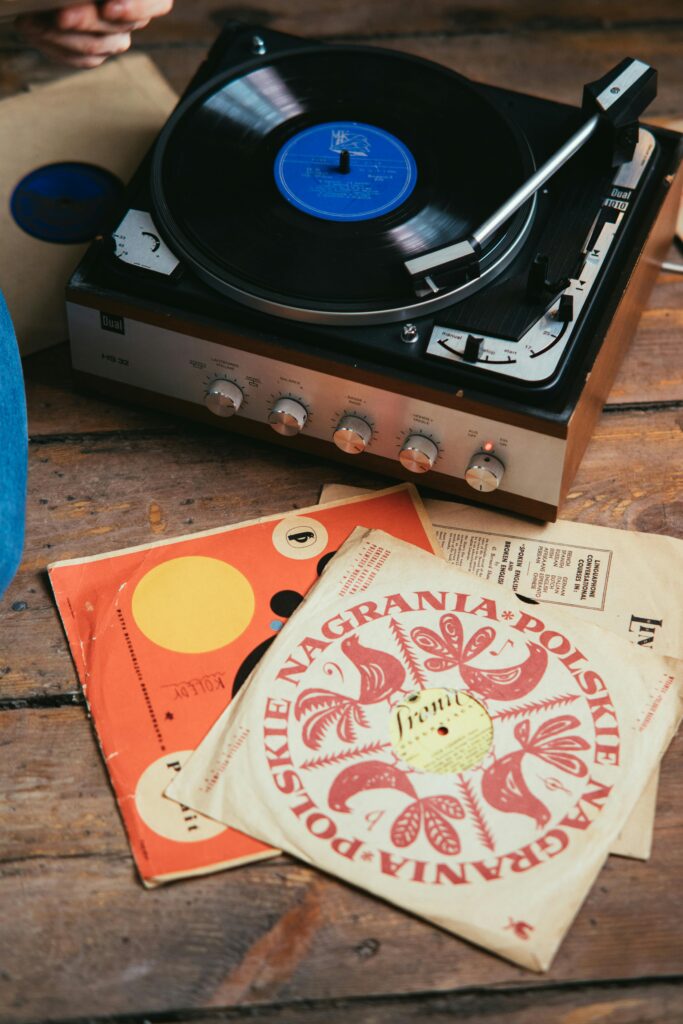
Pro Tip: Original pressings aren’t always better than reissues. For albums like Origin of Symmetry, the 2001 pressing is sought-after, but modern remasters of albums like Nevermind can sound incredible too.
Focus on finding well-reviewed pressings, not just “originals”.
“When you streams Songs for the Deaf, you get the songs. On vinyl, you get the desert.”
The Sounds You’d Never Hear Otherwise
This is what people don’t get about vinyl until they experience it: it’s not about sounding “better” in some objective way. It’s about hearing music the way it was meant to be heard—with space, with dynamics, with room to breathe.
When you stream Songs for the Deaf, you get the songs. On vinyl, you get the desert. The space between the notes. The way Josh Homme’s guitar feedback decays naturally instead of being digitally cut off.
When you play Cross on a turntable, those compressed, distorted basslines don’t just play—they vibrate through your floor. You understand why Justice shows were this visceral, physical experience.
The Aesthetic Isn’t Just Bonus—It’s Part of the Point
Yeah, vinyl looks good on a shelf. That’s not superficial; it’s part of why it matters.
Your collection becomes a visual representation of your taste, your journey, your identity. Someone walks into your space and sees Is This It, Origin of Symmetry, and Around the Fur lined up, and they immediately know something about you. Music stops being background noise and becomes part of your environment.
Plus, album art at 12×12 inches just hits different. The Strokes’ minimalist cover, Muse’s cosmic imagery, Justice’s iconic cross—these are art objects. You’re not just collecting music; you’re curating a gallery of the sounds that define you.
Why You Should Start Collecting
If you’re reading this and you’ve never bought a vinyl record, here’s my advice: start with an album that genuinely matters to you. Not the “correct” choice, not what vinyl snobs say you should own—pick something that changed how you hear music.
For me, it was Black Holes and Revelations. For you, it might be completely different. But I promise, once you drop that needle and hear your favorite album in full, uncompressed, tangible glory? You’ll get it.
You’ll understand why people obsess over pressings, why we spend hours in record stores, why we’ll gladly dedicate entire shelves to plastic discs. Because vinyl isn’t just about audio quality or aesthetic flex—it’s about making music real again.
And in a world where everything lives in the cloud, having something you can actually hold onto feels pretty damn good.

Leave a Reply