Author: Maarten Akker

  • 5 Records I Keep Coming Back to (And Why They Deserve a Spot in Your Collection Too)

    5 Records I Keep Coming Back to (And Why They Deserve a Spot in Your Collection Too)

    6–9 minutes

    One of the best things about building a vinyl collection is that it forces you to be intentional. You’re not shuffling through a playlist on autopilot — you’re picking a record, putting it on, and actually listening. Over time, certain albums just keep ending up back on the turntable.

    Read more: 5 Records I Keep Coming Back to (And Why They Deserve a Spot in Your Collection Too)

    These are five of mine. I bought all of them new from record stores, and every single one has earned its place on the shelf. They span a few different genres, but they have one thing in common: they genuinely sound better on vinyl than anywhere else.

    If you’re just getting started with building a vinyl collection on a budget, picking up records you already love is always a good strategy — and any of these five would be a solid first or early buy.

    Quick warning: this list is biased. Very, very biased. But nonetheless, I firmly believe these records are incredible additions to each collection, with a sound that vinyl extracts perfectly.


    The Records That Are 100% Worth Buying

    Muse – Origin of Symmetry (2001)

    This record doesn’t get talked about enough. There, I said it. Muse displays a degree of musicianship that I personally don’t think many bands were capable of in this era.

    Acts like Pink Floyd, David Bowie and Hawkwind pioneered the space rock sound — larger than life, bombastic and existential music that made you feel like you’re drifting through a void.

    Muse perfected this sound and brought it into the 21st century with Origin of Symmetry by blending the space rock sound with alternative rock on Hyper Music, metal on New Born and operatic influences on Space Dementia and Citizen Erased.

    And my God, Matt Bellamy’s (Muse’s vocalist and frontman) vocals on this album are otherworldly. His trademark falsetto is still in its early days on this album, and it shows.

    His voice is raw, powerful and incredibly energetic. Just listen to Micro Cuts or Megalomania and come back. You’ll see what I mean.

    The album still sounds like it could have been released today, and it shows. Personally, I don’t think it aged a bit and truly stood the test of time.


    Queens of the Stone Age – …Like Clockwork (2013)

    On …Like Clockwork, Josh Homme (the rhythm guitarist, vocalist and frontman of Queens of the Stone Age), finds himself at the lowest point of his life.

    A near-death experience during surgery, coupled with drug and alcohol problems, led him to a deep depression — and he channels all of it across ten masterfully made songs.

    Queens of the Stone Age is known for their blaring guitars, pounding drums, catchy riffs and Joshua’s infectious singing style, which, at first glance, may conflict with a record that is emotional and vulnerable in nature.

    But make no mistake, …Like Clockwork still has plenty of the things that make the Queens so good. Unlike their previous works however, this record is about more than just doing drugs in a desert.

    On Keep Your Eyes Peeled, Joshua starts the record off with passionate piano play, coupled with his trademark falsetto and belting voice.

    It doesn’t take long for the band’s sound to come back into the record though, as I Sat By The Ocean immediately starts off with an iconic guitar riff, addictive drumming and a lead guitar that makes you feel like you’re, well, sitting by the ocean.

    I could go on and on about the songs on this album, and maybe one day I’ll write a proper blog about it, but rest assured that every song has something unique to bring to the table.

    There’s a reason why this is the best alt-rock album of the 2010s. Find out for yourself by letting this spin on your turntable.


    The Strokes – Is This It (2001)
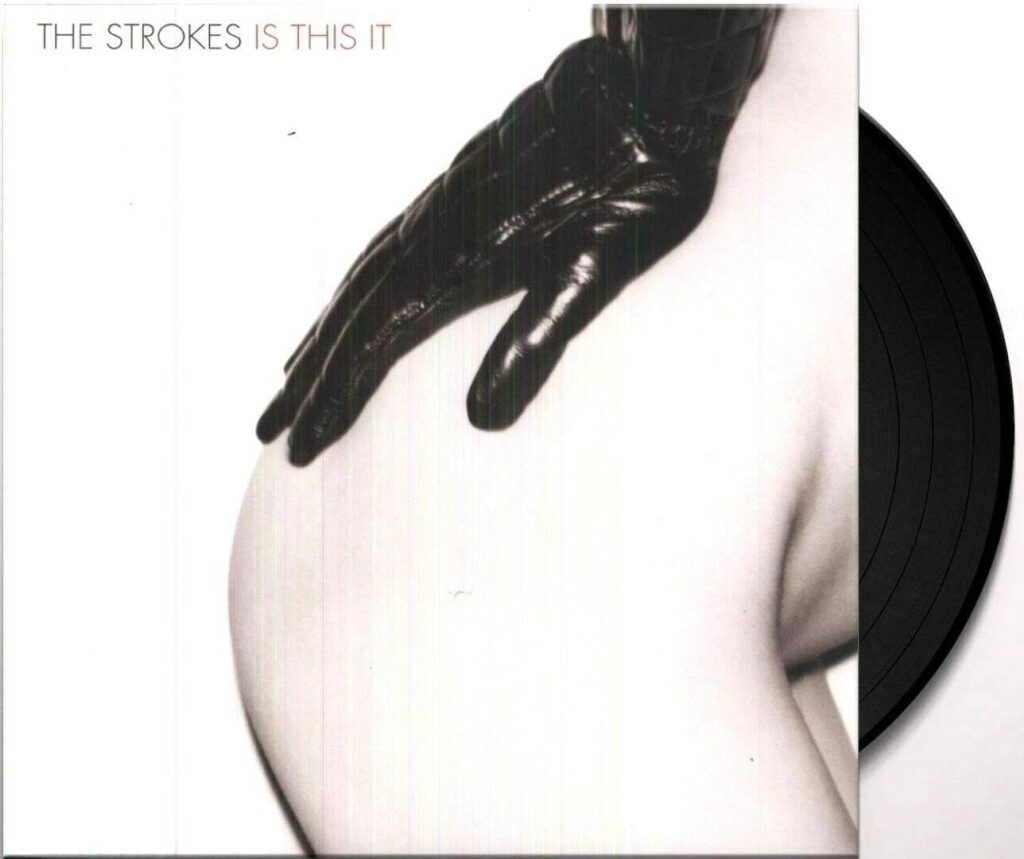
    This record can’t escape conversations such as these, and for very, very good reason.

    Throughout the early 2000s, rock music was in stagnation. Hip-hop and pop music was slowly taking over as the mainstream sound that would be played on the radio, and rock music started to take a backseat.

    Rock wasn’t sexy anymore. It wasn’t fun anymore. It wasn’t danceable anymore. It sure made you feel angry, or justified at the world’s problems, but the suave, sexy, fun and easy-going nature of the 70s and 80s pioneered by acts such as the Beatles, Blondie and the Doors?

    That was gone. And The Strokes brought this fun, garage-rock sound back into the mainstream with Is This It.

    There’s not much that can be said about this album that hasn’t already been said. Julian’s distorted vocals on every track range from powerful and energetic on Last Nite and Hard To Explain, to nostalgic and melancholic on the title track Is This It and Someday.

    While Is This It (the album this time, not the song) was influenced by many acts from the 80s, the album itself probably influenced some of your favourite bands, like Arctic Monkeys, The Killers, Kings of Leon and Franz Ferdinand, and for good reason.

    With Is This It, The Strokes brought fun back into rock music, and they can bring fun into your living room or bedroom, too.


    Justice – † (2007)

    Also known as Cross, Justice brings French House further onto the global stage with †.

    Trailing after Daft Punk’s worldwide success, with Homework and Discovery, the French duo of Justice (Gaspard Augé and Xavier de Rosnay), take what Daft Punk did on the aforementioned albums and further implement elements of alt-rock, metal, funk and disco into a banging record of twelve addictive and pounding EDM tracks.

    The album’s opening track, Genesis, opens up with blaring synths, which lead into a crunching bass-line and larger-than-life synth assortment. The track constantly glitches out, bringing cut-up vocals into the mix throughout, and as a high-pitched synth is introduced and layers on top of itself as it rises and rises in pitch, groovy guitars take it away, bringing danceability into the track, before seamlessly leading into the next track, Let There Be Light.

    You can probably notice the religious influences already. I mean, the album art is literally a Christian cross angled upwards. Not only that, but tracks titled Genesis, Let There Be Light and Waters of Nazareth leave little to subtlety.

    The actual content of the tracks doesn’t have much religious theming, however. Per the French duo — the religiously themed visual and conceptual style is largely a branding choice, rather than a running theme throughout the music.

    Nevertheless, the bombastic electronic music showcased on Stress, Phantom, Phantom Pt.II and Waters of Nazareth with the dance-y and groovy Newjack, DVNO and D.A.N.C.E. sprinkled throughout make for a fantastic listening experience, especially on vinyl.


    Cocteau Twins – Heaven or Las Vegas (1990)
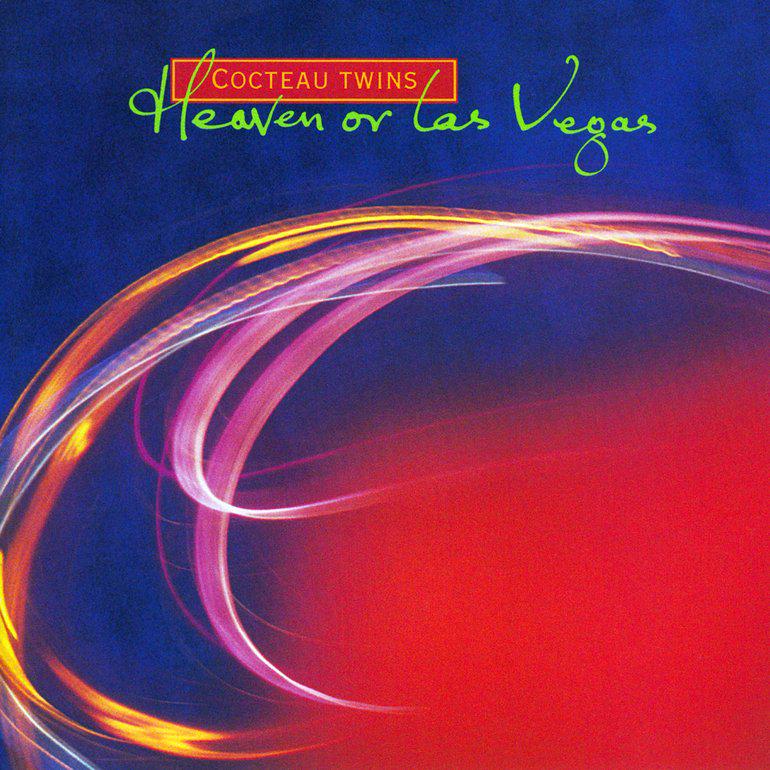
    If you have ever wanted to lie down on the couch, sink into the cushions, close your eyes and drift off into a world of rose-colored dreams, this would be the album to do so.

    Cocteau Twins with Heaven or Las Vegas pioneered the reverb-drenched shoegaze sound that some of you may know and love today.

    What makes this record so special is not only the instrumentation which sounds like it was pulled from a dream world, but also Elizabeth Fraser’s soaring, operatic vocals which often made use of glossolalia — made-up words and unintelligible language which is meant to be treated as another instrument rather than a traditional narrative (so if you have no idea what’s being sung, don’t worry. That’s the point.).

    Regardless of the musical content of the album, Heaven or Las Vegas also feels deeply personal and human. Coming off of the heels of the birth of Fraser’s child, marriage troubles, and the tragic death of bassist Simon Raymonde’s father, every track is loaded with emotional weight.

    The resulting tension between worldly struggles and heavenly relief gives the album immense emotional weight. I know I’ve shed a few tears to songs such as Iceblink Luck, I Wear Your Ring and Fotzepolitic.

    If you’d like to find out just what makes people love this band and this side of the shoegaze genre so much, give Heaven or Las Vegas a listen.

    And if you ask me personally, you’re doing the record a disservice by not capturing the raw, emotional energy on physical vinyl.


    That’s five records I keep coming back to — different moods, different genres, but all of them worth owning on wax. If any of these are already in your collection, I’d love to know what you think. And if you’re picking them up for the first time, make sure you clean them properly before your first play — especially if you’re buying used.

    New to collecting and not sure where to start? Check out why I got into vinyl in the first place — it might convince you too.
  • 10 Vinyl Record Tips for Beginners

    10 Vinyl Record Tips for Beginners

    4–6 minutes

    Getting into vinyl collecting is one of those hobbies where nobody gives you a proper introduction. You buy a turntable, grab a few records, and then slowly discover — sometimes the hard way — all the little things that would have been nice to know from the start.

    This is that list. Whether you’re brand new or a few records in, these vinyl record tips for beginners will save you time, money, and a few headaches.

    Read more: 10 Vinyl Record Tips for Beginners

    Handle Records by the Edges — Always

    Probably the #1 tip I always give people that are looking to get into this stuff. It’s so, so important to handle your records with care.

    Your fingers contain oils that transfer to the vinyl surface and attract dust. Over time, fingerprints in the grooves cause a dull haze and increased surface noise that’s difficult to clean off.

    Get into the habit immediately: hold records with one hand on the edge and one finger on the label in the centre. It feels awkward at first and then becomes completely automatic.


    Dry Brush Before Every Single Play

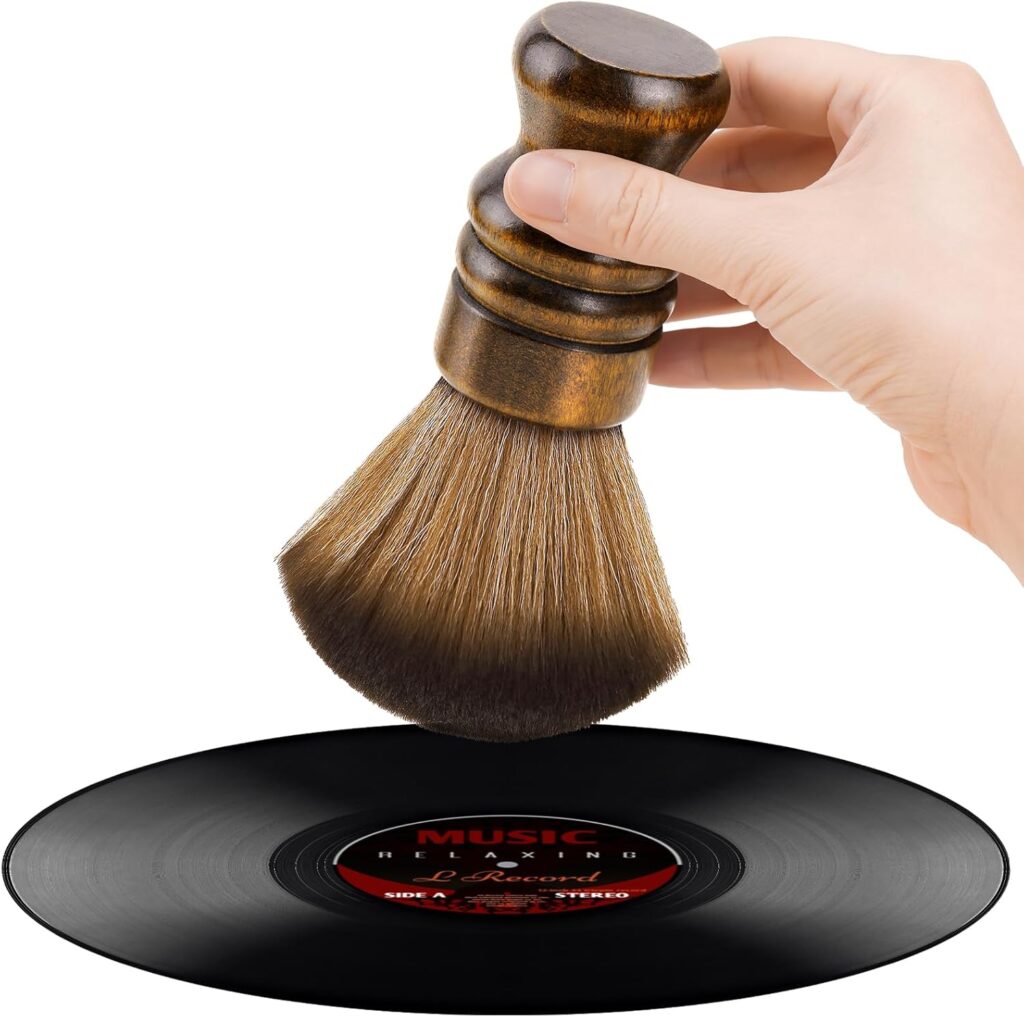
    A carbon fibre anti-static brush is one of the cheapest and most impactful accessories you can own — around €8–12. Run it gently across the record in the direction of the grooves before every play to remove loose dust and reduce static.

    This takes about 10 seconds and makes a noticeable difference to sound quality. Skip it and you’re dragging whatever’s settled on the surface right through the grooves with your stylus.


    Don’t Judge a Used Record by Its Cover

    This is one of the most useful vinyl collecting tips for anyone buying second-hand: a tatty sleeve often contains a perfectly playable record, and a pristine sleeve can hide a disaster inside.

    Always inspect the playing surface directly. Hold it at an angle under a light and look for deep scratches (bad) versus light scuffs (usually fine). Surface marks that look alarming often clean up well. Deep radial scratches across the grooves are harder to recover from.

    Don’t let a beat-up cover put you off a potentially great record.

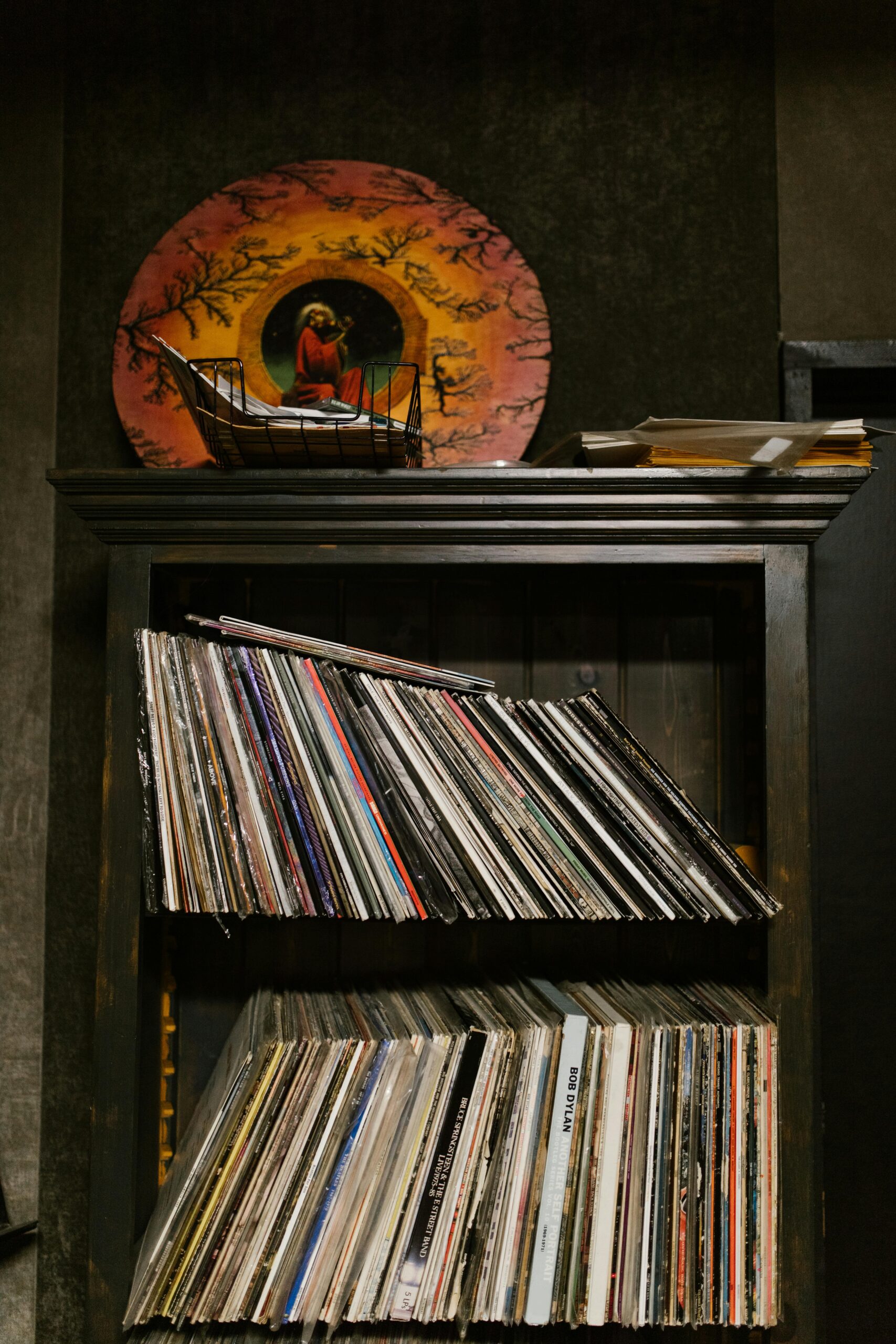
    A person browsing through an assortment of used vinyl records

    Your Stylus Needs Replacing Too

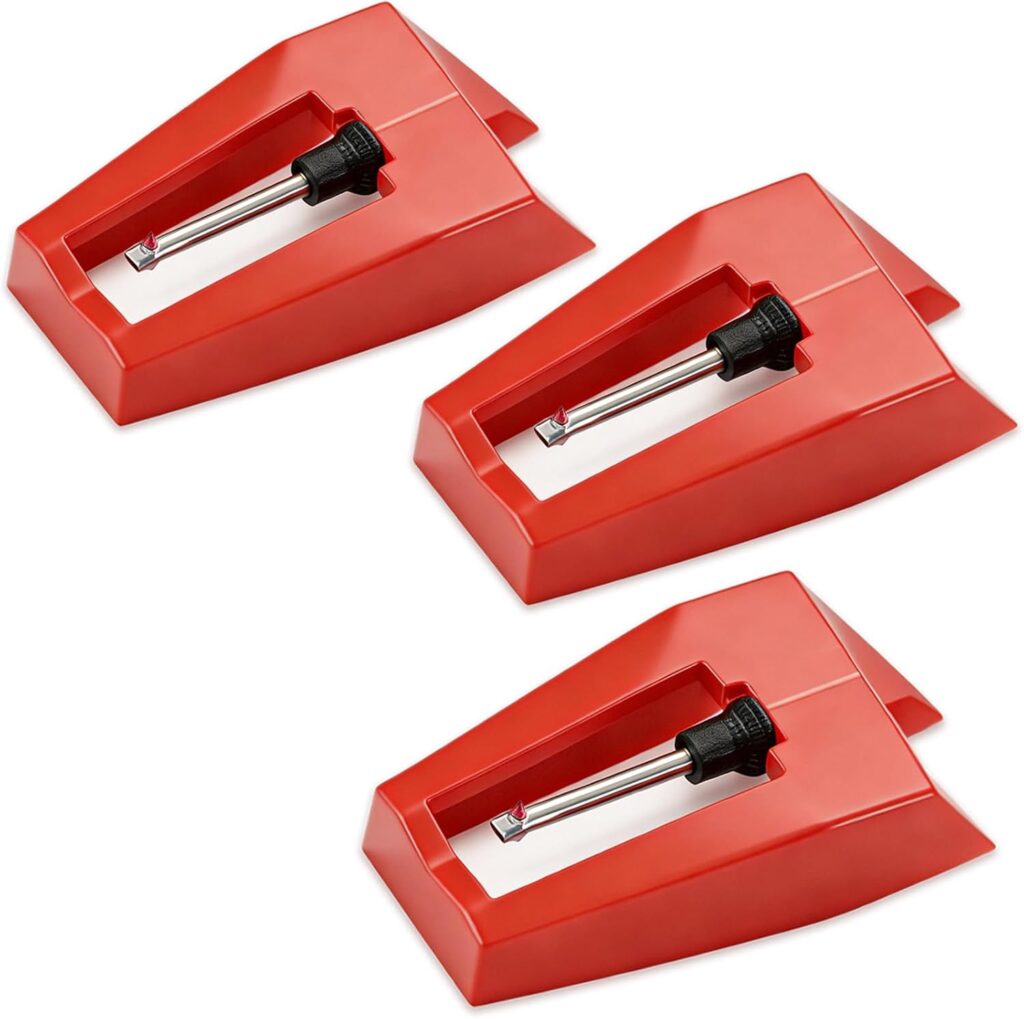
    A lot of beginners focus entirely on the turntable and records, and forget that the stylus (needle) wears down over time. A worn stylus doesn’t just sound worse — it actively damages your records by tracking incorrectly through the grooves.

    Most styli last around 500–1000 hours of play depending on quality. If you’re playing records regularly, keep track and budget for a replacement every year or two. Your records will thank you.


    Start With Used Records — Not New

    New records are expensive. A brand new pressing can easily run €25–35, sometimes more. When you’re just getting into vinyl, spending that on an album you might not vibe with on wax is a risk.

    Charity shops, record fairs, and second-hand shops are where the fun is anyway. You can find incredible records for €1–5, and the hunt is half the experience. Save new pressings for albums you already know you love.


    Avoid the Cheapest Possible Turntable

    There’s a floor below which turntables actively harm your records. The ultra-cheap suitcase-style turntables (under ~€50) often have ceramic cartridges with heavy tracking force that grinds through grooves. They might play records, but they’re slowly destroying them.

    The entry-level sweet spot for a beginner is around €100–150 — something like an Audio-Technica AT-LP60X or a secondhand belt-drive deck with a decent cartridge. It doesn’t need to be expensive, just not the cheapest possible option.


    Store Records Vertically, Like Books

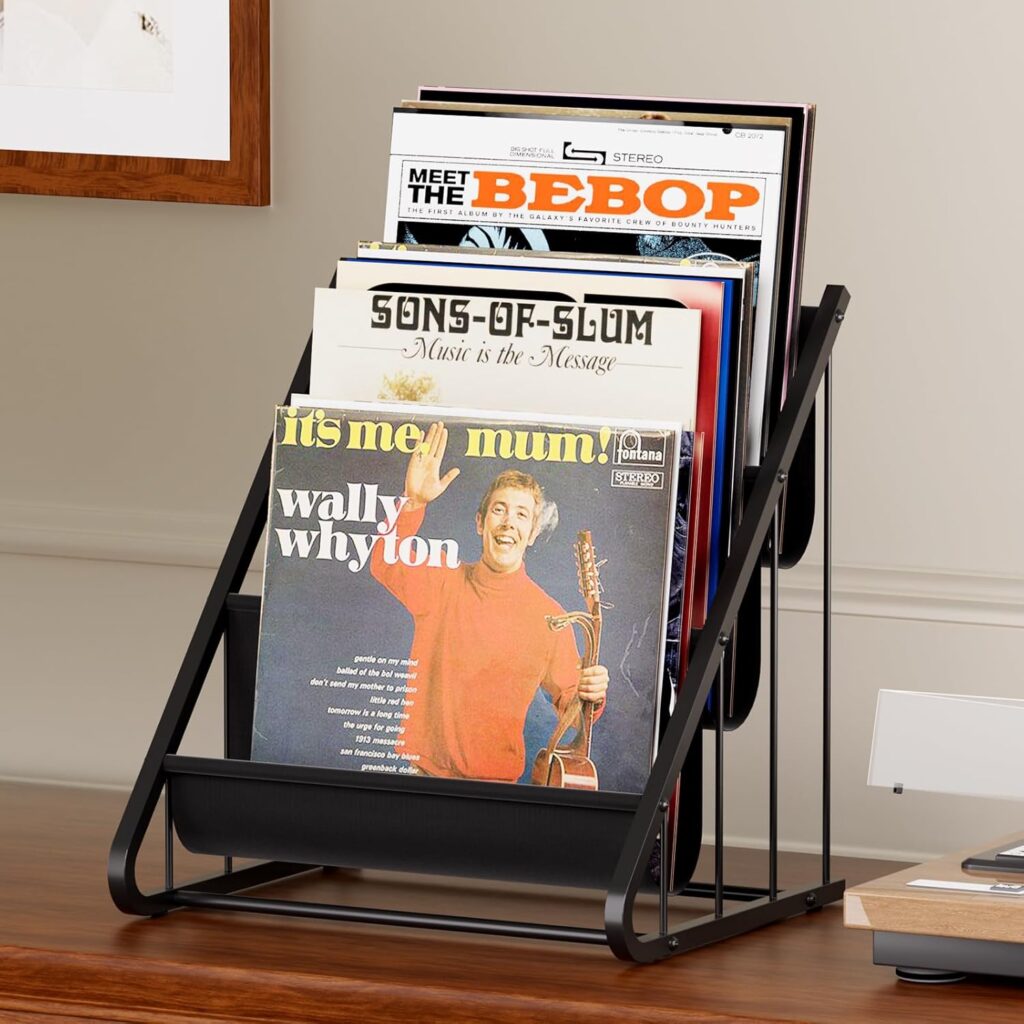
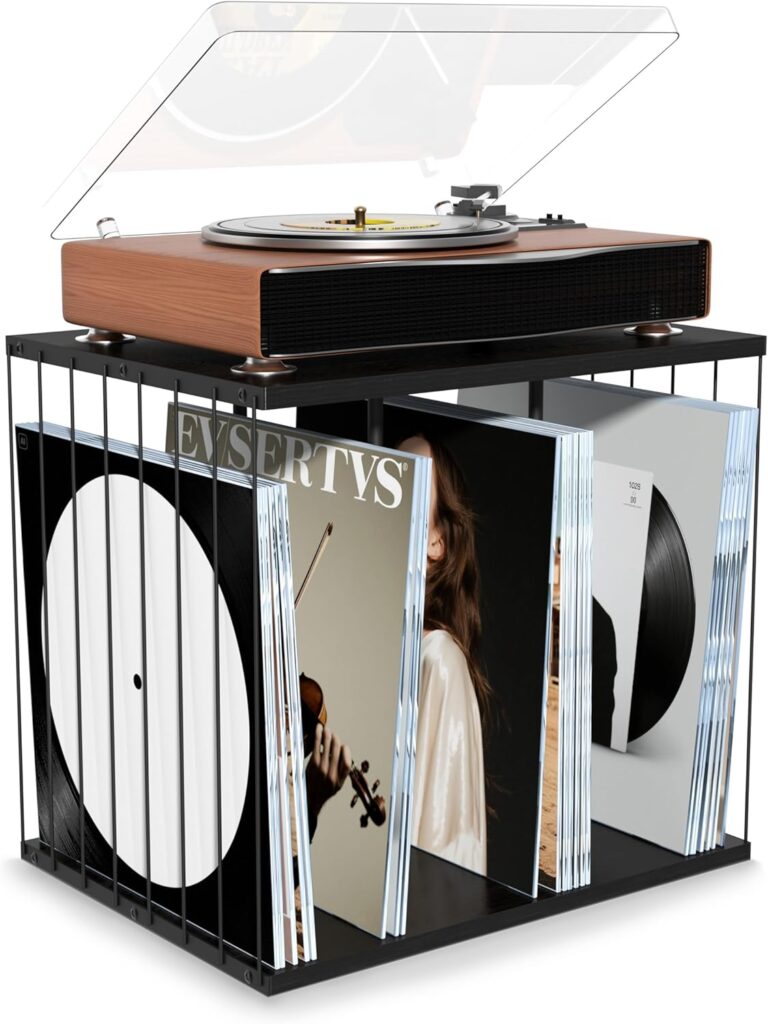
    Never stack records flat. The weight of records on top of each other causes warping, especially in warmer conditions. Always store them upright, snug but not crammed — exactly like books on a shelf.

    An IKEA Kallax unit is the classic beginner solution for a reason: it’s cheap, sturdy, and each cube holds around 60–70 records perfectly. Bookends work fine for smaller collections.


    Listen Before You Grade

    If you’re buying records and reselling or trading, or just want to know what you actually have, always listen before you assign a condition grade. Visual grading (judging by looking at the surface) is useful but imperfect — some visually rough records play beautifully, and some visually clean records have issues that only reveal themselves on the turntable.

    Your ears are the final judge. A record that plays well is a good record, regardless of what it looks like.


    Don’t Let Anyone Make You Feel Like You’re Doing It Wrong

    This is the most important tip on the list. Vinyl collecting has a gatekeeping reputation — audiophiles who insist you need a €2000 turntable, purists who look down on certain genres or pressings, people who think you’re not a “real” collector if your setup isn’t perfect.

    Ignore all of it. If you’re enjoying the music, you’re doing it right. Buy what you like, play it on whatever you can afford, and don’t let anyone’s snobbery take the fun out of it.

    That’s the whole point.


    Quick Reference: Beginner Do’s and Don’ts

    DoDon’t
    Handle records by the edgesTouch the playing surface
    Dry brush before every playPlay records without brushing first
    Buy used records to startBlow your budget on new pressings immediately
    Store records verticallyStack records flat
    Swap paper inner sleeves for polytheneKeep scratchy paper inners
    Replace your stylus regularlyForget the stylus wears out
    Judge records by listeningOnly grade visually

    Want to Go Further?

    These tips are a starting point. Once you’ve got the basics down, check out:

  • How to Store Vinyl Records Properly (And Why It Matters)

    How to Store Vinyl Records Properly (And Why It Matters)

    5–7 minutes

    You spent time hunting down that record. Maybe it came from a charity shop, maybe a record fair, maybe you finally splurged on a new pressing. The last thing you want is to pull it off the shelf six months later and find it warped, cracked, or covered in mold.

    Bad storage ruins records. Good storage is dead simple and mostly free. Here’s everything you need to know about how to store vinyl records properly — whether you own 5 records or 500.

    Read more: How to Store Vinyl Records Properly (And Why It Matters)

    Why Proper Vinyl Record Storage Matters

    Vinyl is surprisingly resilient when treated well, and surprisingly fragile when treated badly. The three main enemies are:

    • Heat — warps records, sometimes permanently
    • Moisture — causes mold on sleeves and labels
    • Pressure — stacking records flat causes warping and sleeve wear over time

    The good news is that avoiding all three costs almost nothing. It’s mostly about habits.


    The Golden Rule: Always Store Records Vertically

    You may have seen this one in another blog post of mine, namely How to Clean Vinyl Records at Home (Without Ruining Them). That’s how important it is! Store your records standing upright, never flat.

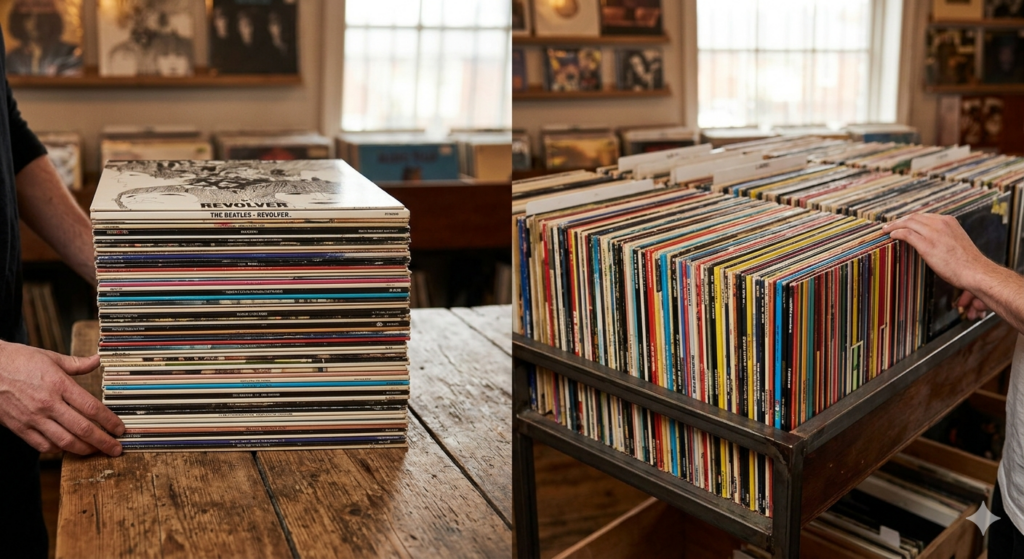
    Stacking records horizontally puts uneven pressure on the bottom records, which causes warping over time. Even a slight warp affects playback — the needle loses contact with the groove, causing distortion and skipping.

    Upright storage distributes weight evenly and keeps records in their natural shape. Think of it like books on a shelf — upright, snug but not crammed.

    Practical tip: Don’t lean records at an angle either. If your shelf isn’t full yet, use bookends to keep them standing straight. Leaning at 45 degrees long-term will also cause warping.

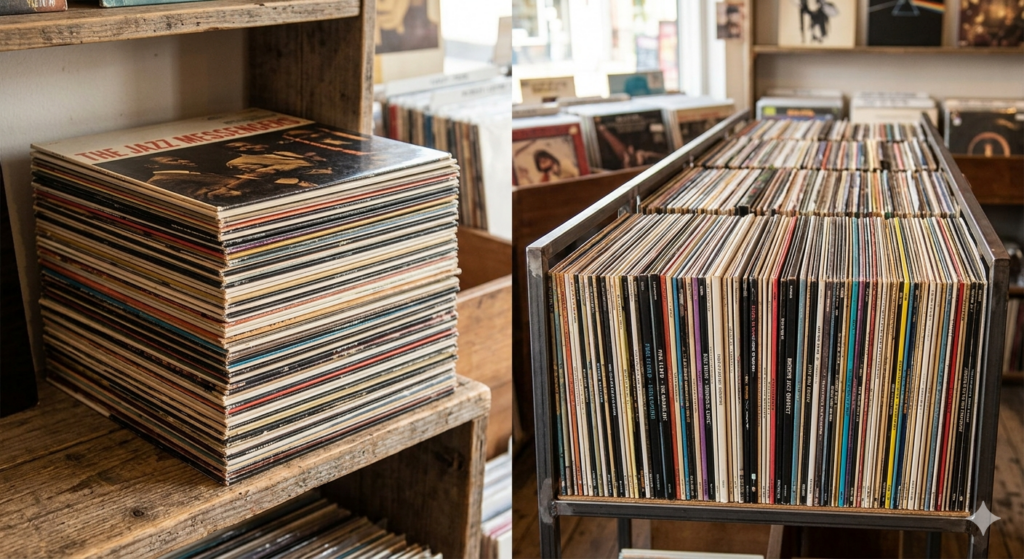
    A showcase of different ways to store vinyl, stacked on top of one another on the left side, and assorted vertically on the right.

    Where to Store Vinyl Records: The Right Environment

    Temperature

    The ideal storage temperature for vinyl records is between 18–22°C. Avoid:

    • Attics (too hot in summer, too cold in winter)
    • Garages (same problem, plus damp)
    • Near radiators or windows with direct sunlight

    Room temperature is fine. A spare bedroom shelf, a living room unit, a dedicated record shelf — all good. Just keep records away from heat sources.

    Humidity

    Aim for 45–50% relative humidity. Too dry and sleeves crack; too damp and you’re inviting mould. In most normal homes this isn’t something you need to actively manage — just avoid storing records in damp basements or bathrooms.

    Light

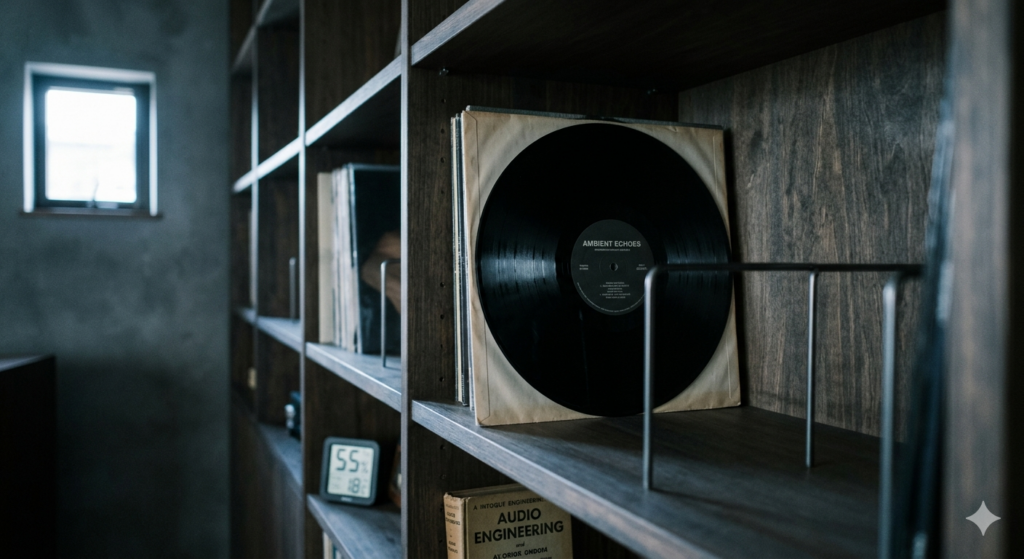
    Keep records out of direct sunlight. UV light degrades both the vinyl and the artwork over time. A shelf away from windows is ideal.


    To store your records properly, like mentioned above, in a cool, dimly lit area.

    Keep them away from direct sunlight and heat sources, and store them vertically.


    Inner Sleeves: The Most Underrated Upgrade

    The paper inner sleeve your record came in? It’s scratching your record every time you slide it in and out.

    Paper fibres are coarse enough to create micro-scratches on the playing surface. Over time, those scratches add up to surface noise — that hiss you hear between tracks.

    The fix: Replace paper inner sleeves with polythene (plastic) inner sleeves. They’re smooth, anti-static, and cost almost nothing — around €0.15–0.25 each when bought in bulk.

    Look for:

    • HDPE (high-density polyethylene) sleeves — the gold standard, completely inert
    • Anti-static polythene sleeves — a small step up, reduces dust attraction

    How to do it:

    1. Slide the record out of the paper sleeve carefully
    2. Place it in the new polythene sleeve
    3. Put the polythene sleeve (with record inside) back into the original outer sleeve

    This way you keep the original artwork sleeve but protect the record with a clean inner.


    Outer Sleeves: Optional but Worth It

    If you want to protect your album artwork from ring wear, split corners, and general shelf damage, outer polythene sleeves are worth considering. They slip over the entire outer sleeve and keep it looking pristine.

    They’re not essential for every record, but for anything you care about — first pressings, limited editions, albums with artwork you love — they’re a cheap way to preserve value.


    Common Vinyl Storage Mistakes to Avoid

    • Stacking records flat — the most common mistake, especially for beginners. Even a few weeks flat can cause warping in warm conditions.
    • Storing near a radiator — vinyl starts to soften at around 60°C, but even mild sustained heat (like a record leaning against a warm wall behind a radiator) causes slow warping over months.
    • Leaving records out of their sleeves — if you take a record off the turntable and leave it sitting on top of the stack, dust settles into the grooves within hours. Always sleeve it immediately after playing.
    • Overfilling shelves — records crammed too tightly are hard to remove without damaging sleeves, and the pressure can cause warping. Leave a little breathing room.
    • Keeping original paper inner sleeves — as covered above, swap them out. It’s cheap and makes a real difference to long-term sound quality.

    Budget Storage Solutions for Student Collectors

    You don’t need expensive dedicated record furniture to store vinyl properly. Here’s what actually works on a tight budget:

    • IKEA Kallax — the classic. Each cube holds about 60–70 records upright. It’s cheap, sturdy, and looks good. The standard choice for a reason.
    • Wooden crates — milk crates or similar work fine for smaller collections. Check that the bottom supports records fully so they don’t sag.
    • Cardboard record boxes — great for transport or overflow storage. Available from most record shops or online for a few euros each.

    What to avoid: flimsy plastic bins where records lean at angles, or anything that forces records to sit at anything other than vertical.


    DODON’T
    Store vertically, like booksStack horizontally
    Use polythene inner sleevesKeep original paper inners
    Keep at room temperatureStore near radiators or in attics
    Leave breathing room on shelvesCram records in too tightly
    Sleeve records immediately after playingLeave records out of sleeves
    Clean before long-term storageBox up dirty records

    Final Thoughts

    Storing vinyl records properly is one of those things that sounds complicated but really isn’t. Stand them upright, keep them at room temperature, swap out paper inner sleeves for polythene ones, and keep them out of direct sunlight. That covers 90% of what you need to know.

    Do it right from the start and your records will still sound great in 20 years. Do it wrong and you’ll be wondering why that €30 pressing sounds like it was found in a skip.


    Before you store them, make sure they’re clean. Read our guide on how to clean your records and keep them at pristine condition: How to Clean Vinyl Records at Home (Without Ruining Them)

  • How to Clean Vinyl Records at Home (Without Ruining Them)

    How to Clean Vinyl Records at Home (Without Ruining Them)

    4–6 minutes

    You’ve just dropped the needle on a record you scored at a charity shop for €2. It sounds great — but there’s a crackle underneath. A pop every few seconds. That familiar grittiness that tells you this thing hasn’t been cleaned in years.

    Good news: that’s almost always fixable. Learning how to clean vinyl records at home is one of the most useful skills you can have as a collector, and you don’t need expensive equipment to do it properly.

    Here’s everything you need to know.

    Read more: How to Clean Vinyl Records at Home (Without Ruining Them)

    Why Cleaning Your Vinyl Records Actually Matters

    Dust and dirt don’t just cause noise — they cause damage. Every time your stylus tracks through a dirty groove, it’s pushing grit along with it. Over time, that wears down both the record and your needle.

    A clean record:

    • Sounds noticeably better (less crackle, more detail)
    • Lasts longer
    • Is kinder to your stylus

    The good news is that most of the grime you’ll find on used records is surface-level and completely cleanable. Even records that look hopeless can often be restored to great playback condition.


    What You’ll Need

    You don’t need a professional record cleaning machine to clean vinyl records at home. Here’s what actually works:

    Budget setup (€10–15 total):

    • A carbon fibre anti-static brush (~€8–12)
    • A microfibre cloth
    • Distilled water

    One step up (€20–30 total):

    • A dedicated vinyl record cleaning solution (like KNOSTI or Vinyl Buddy)
    • A carbon fibre brush
    • A velvet record cleaning brush

    What to avoid:

    • Tap water (contains minerals that leave residue)
    • Paper towels or regular cloths (they scratch)
    • Isopropyl alcohol on its own (too harsh without dilution — it can dry out the vinyl)
    • Your breath — yes, some people try this. Don’t.

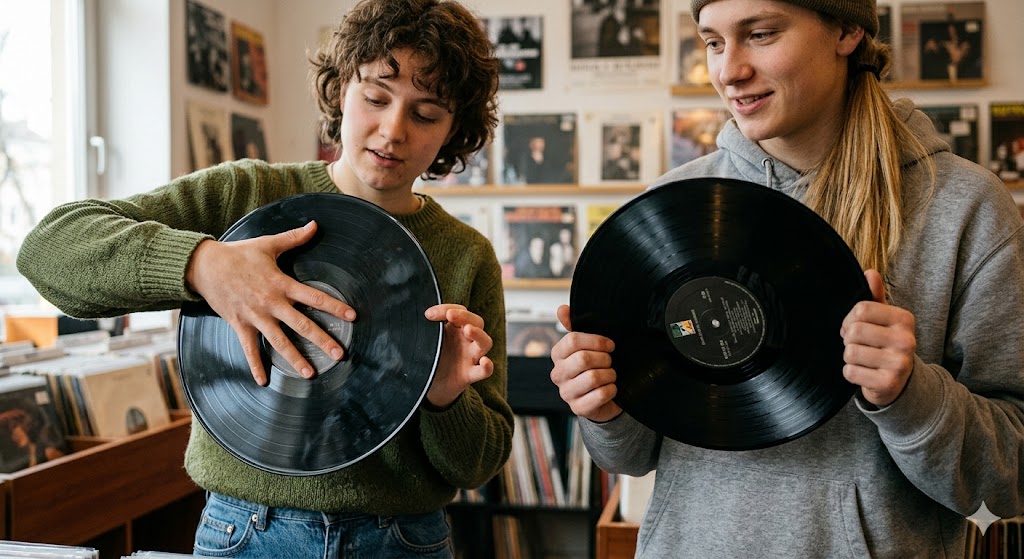
    A person showing another person how to properly hold a vinyl record

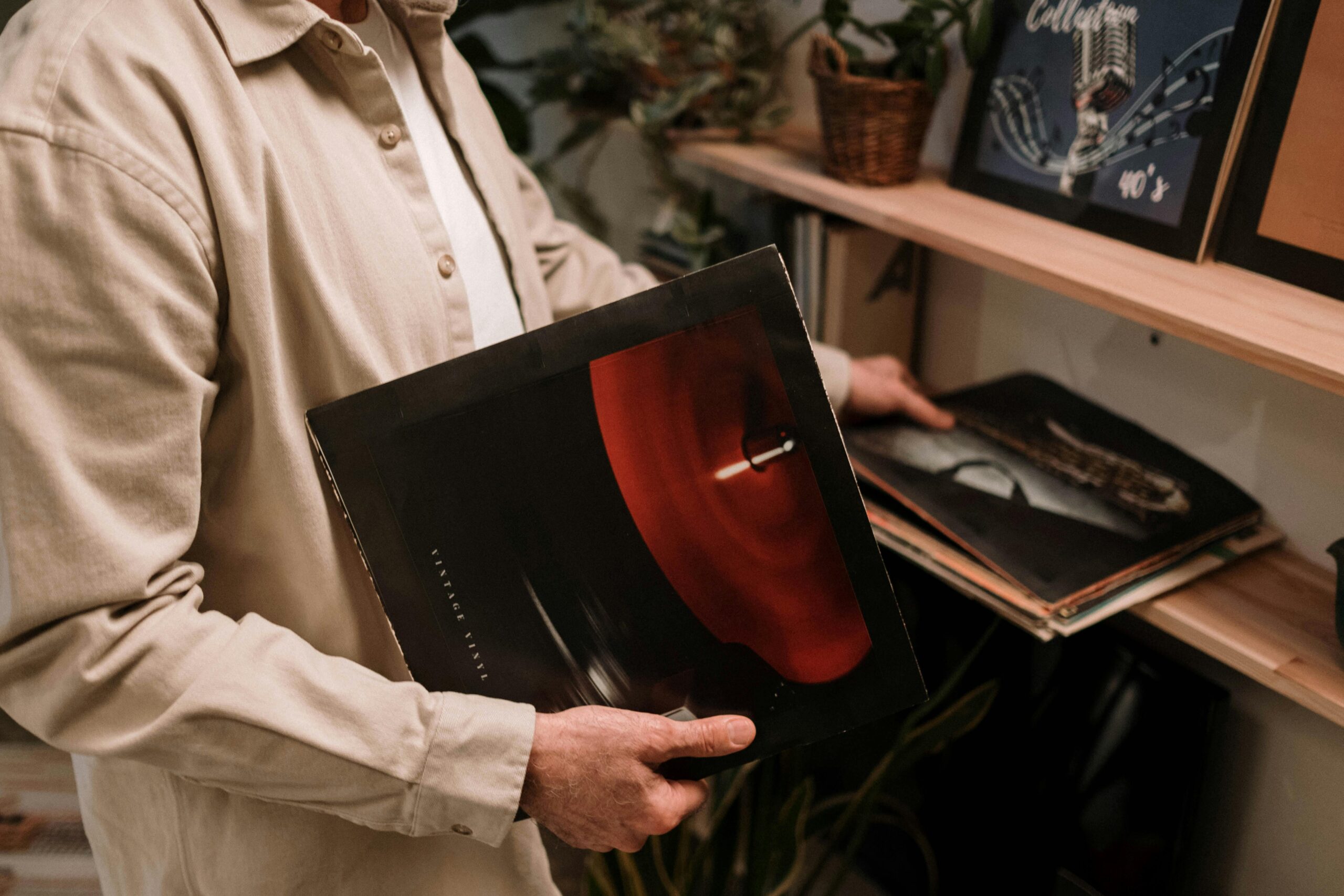
    When cleaning a record, hold it gently by its sides or place it on a soft, dust-free surface. Avoid placing your hands directly over the record, as dust and fingerprints can assimilate on the record, potentially damaging it or requiring further cleaning.


    How to Clean Vinyl records at Home: Step by Step

    Step 1: Dry brush before every play

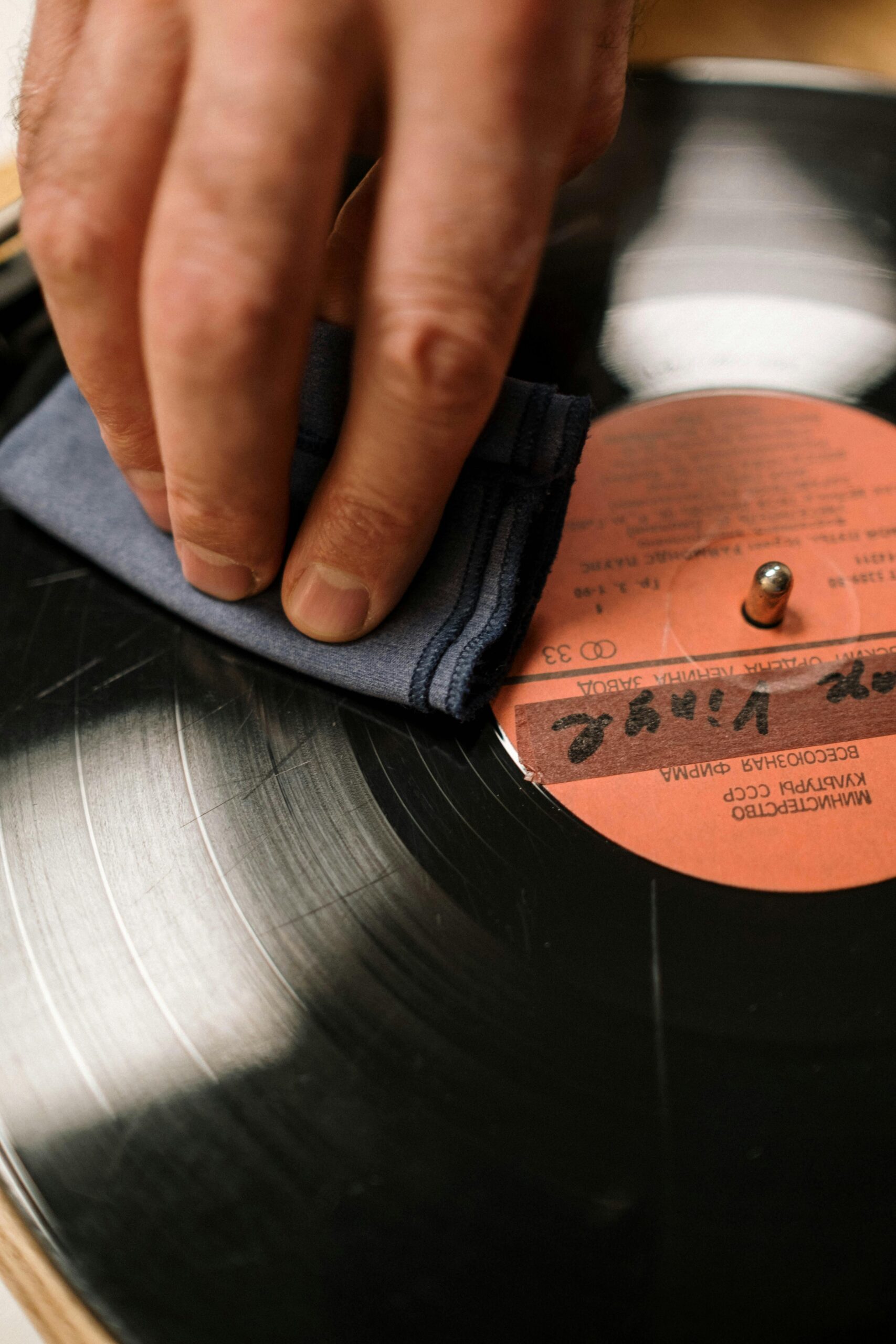
    Before you even think about wet cleaning, always dry brush your record first. This removes loose dust and static that accumulates just from sitting on a shelf.

    How to do it:

    1. Hold the record by the edges and label — never touch the playing surface with your fingers (skin oils are bad for vinyl)
    2. Place the carbon fibre brush gently across the grooves
    3. Rotate the record slowly (one full rotation is enough)
    4. Lift the brush off in the direction of the grooves — don’t drag it backwards

    Do this every single time before you play. It takes 10 seconds and makes a real difference.

    Step 2: Wet clean for deeper grime

    For records that are visibly dirty, dusty, or crackly despite dry brushing, a wet clean is the best way to clean vinyl records properly.

    How to do it:

    1. Apply a small amount of cleaning solution (or distilled water) to your velvet brush or microfibre cloth — never directly onto the record
    2. Work in gentle circular motions following the direction of the grooves (always groove-direction, never across)
    3. Use light pressure — you’re lifting dirt out of the grooves, not scrubbing
    4. Wipe away residue with a clean, dry microfibre cloth
    5. Let the record air dry completely before playing — at least 10–15 minutes

    Tip: If you’re using distilled water, a tiny drop of washing-up liquid (like Fairy) diluted heavily in water works fine as a budget cleaning solution. Use sparingly and always rinse.

    Step 3: Store it clean

    Once your record is clean, put it straight into a clean inner sleeve. If the original paper inner sleeve is tatty or dusty, replace it with a polythene/plastic inner sleeve (~€0.20 each). This keeps the record clean between plays and protects it from static.


    Storing tip: store your vinyl records assorted side by side, not stacked on top of one another!

    Stacking your records on top of one another can warp the vinyls, bending them as the weight of the records is distributed unevenly.

    A side-by-side comparison of two vinyl collections. One of them has the records stacked on top of one another, while another has them assorted side-by-side

    How Often Should You Clean Vinyl Records?

    That’s the big question, isn’t it? Cleaning your vinyl regularly is very important if you want to see consistent play out of them. Once a vinyl is damaged, there’s (unfortunately) no going back.

    To ensure the quality of your record stays consistent, maintain the following protocol:

    Dry brush (Step 1): Every single play, no exceptions

    Wet clean (Step 2): When you first buy a used record, or when you notice a drop in sound quality

    Deep clean (Step 3): A couple of times a year for records you play often


    What About a Record Cleaning Machine?

    You may have seen a few these float about. They’re only really worth it once you get serious about collecting, to be honest.

    Most of them would be around €80 or so. It’s not a machine in the expensive sense, however. It’s a bath system where you manually rotate the record through a cleaning fluid and let it dry on a rack. An example would be this KNOSTI anti-static plate-washer.

    For a beginner or student collector, it’s not essential. The manual method mentioned above will handle 95% of what you’ll encounter. But if you’re buying a lot of used records regurlarly, the KNOSTI pays for itself fast.


    Quick Reference: The Cleaning Routine

    SituationMethod
    Before every playCarbon fibre dry brush
    New (used) recordWet clean first, then dry brush before playing
    Crackling/noisy recordWet clean
    Long-term storageClean + replace inner sleeve

    Final Thoughts

    Cleaning your vinyl records at home doesn’t have to be complicated or expensive. A carbon fibre brush and some distilled water will get you 80% of the way there. The habits matter more than the tools — dry brush every play, wet clean when needed, and store your records properly.

    Do that consistently and your records will sound better, last longer, and your stylus will thank you too.


    Want to go further? Check out our guide on How to Store Vinyl Records Properly (And Why It Matters)to make sure your collection stays in shape for years to come.

  • How to Build a Vinyl Collection on a Student Budget

    How to Build a Vinyl Collection on a Student Budget

    11 February 2026 | Reading Time: 4-6 minutes

    Let’s be real: you’re a student. You’ve got rent, groceries, textbooks, and maybe enough left over for a night out. The idea of collecting vinyl—where single albums can cost €25-40—seems impossible.

    But here’s the thing: some of the best vinyl collections were built on tight budgets. You just need to know where to look and what to avoid. I built my first 50 records as a broke university student spending less than €300 total. Here’s exactly how I did it.

    (more…)
  • Original Pressing vs Reissue: Does It Actually Matter?

    Original Pressing vs Reissue: Does It Actually Matter?

    11 March 2026 | Reading Time: 6 minutes

    You’re scrolling through Discogs, eyeing a copy of The Dark Side of the Moon, and you notice something: the 1973 original pressing costs €150, while the 2016 remaster is €25. Same album. Wildly different prices. So what’s the actual difference, and does it really matter which one you buy?

    Let’s cut through the vinyl snobbery and figure out when original pressings are worth the premium—and when a modern reissue is the smarter choice.

    (more…)
  • 10 Must-Own Vinyl Records for New Collectors

    10 Must-Own Vinyl Records for New Collectors

    10 Must-Own Vinyl Records for New Collectors

    13 February 2026 | Reading Time: 6 minutes

    So you want to start collecting vinyl but have no idea where to begin? Trust me, staring at endless rows of records can be seriously overwhelming. The good news? You don’t need to overthink it. These ten albums are the perfect starting point—they sound amazing on vinyl, look incredible on your shelf, and give you that warm fuzzy feeling streaming just can’t match.

    (more…)
  • Why I Started Collecting Vinyl (And Why You Should Too)

    Why I Started Collecting Vinyl (And Why You Should Too)

    February 2026 | Reading Time: 7 minutes

    Everyone’s got that one album or artist, right? The one that completely rewired your brain and made you realize music could be more than just background noise.

    For me, that album was Muse’s Black Holes and Revelations (2006). It showed me music could be theatrical, cinematic, and completely unashamed of its own excess. That discovery led me down a path from streaming playlists to building a physical vinyl collection—and it changed how I experience music forever.

    (more…)
  • 5 Vinyl Finds I Can’t Stop Playing This Month

    5 Vinyl Finds I Can’t Stop Playing This Month

    5 Vinyl Finds I Can’t Stop Playing This Month

    February 2026 | Reading Time: 8 minutes

    Look, I know we all say “this month’s finds” and then proceed to spin the same three records for weeks straight. But genuinely? These five albums have been on constant rotation lately, and I had to share. They’re all relatively recent releases that absolutely deserve a spot in your collection—whether you’re just getting into vinyl or you’ve been collecting for a minute.

    (more…)